
Equipping Yourself with the Armor of God: A Guide to Everyday Life
In a world where challenges abound and trial seem ever-present, finding guidance and strength in spiritual teaching is a beacon of hope and will give you resilience. Ephesians 6:11-13 offers profound wisdom in the regard, urging believers to “put on the whole armor of God” to stand against the adversities of life. Let’s delve into the significance of these verses and how they can empower us in navigating the complexities of everyday life.
Understanding Ephesians 6:11-13
Ephesians 6:11-13, a passage often referred to as the Armor of God, reads:
11 Put on the whole armor of God, that you may be able to stand against the wiles of the devil. 12 For we do not wrestle against flesh and blood, but against principalities, against powers, against the rulers of the darkness of this age, against spiritual hosts of wickedness in the heavenly places. 13 Therefore take up the whole armor of God, that you may be able to withstand in the evil day, and having done all, to stand.
This powerful metaphorical imagery paints a vivid picture of spiritual warfare. It reminds us that our struggles are not merely physical or material but often stem from unseen spiritual forces. The “armor of God” serves as our protection and strength in facing these challenges head-on.
Applying the Armor of God to Everyday Life
1. The Belt of Truth:
In our world where falsehoods and misinformation abound, embracing truth is essential. By grounding ourselves in honesty and integrity, we equip ourselves with a firm foundation upon which to build our lives.
2. The Breastplate of Righteousness:
Living with integrity and moral uprightness safeguards our hearts from the assaults of guilt and shame. By striving to do what is rights, we fortify ourselves against the temptations of wrongdoing.
3. The Shoes of the Gospel of Peace:
Our world is fraught with discord and unrest, spreading love and peace becomes paramount. By walking in the footsteps of compassion and understanding, we create pathways of harmony and reconciliation.
4. The Shield of Faith:
Faith serves as our shield against doubt and despair. By placing our trust in a higher power and believing in the goodness of the universe, we deflect the arrows of cynicism and hopelessness.
5. The Helmet of Salvation:
Securing our minds with the knowledge of salvation offers us clarity and assurance. By embracing the hope of redemption and eternal life, we guard ourselves against the uncertainties of mortality.
6. The Sword of the Spirit:
The Holy Word of God, symbolized by the “sword of the Spirit,” becomes our weapon against spiritual adversaries. By immersing ourselves in sacred teachings and divine wisdom, we equip ourselves with the power to discern truth from falsehood.
Ephesian 6:11-13 serves as a timeless reminder of the spiritual warfare that permeates our lives everyday and the importance of being prepared for the battles we face. By embracing the metaphorical “armor of God” we empower ourselves to overcome adversity, withstand temptation, and stand firm in our faith.
As we navigate the complexities of everyday life, let us heed the wisdom of these verses and strive to embody the virtues they represent. In doing so, we can find strength, courage, and resilience in the face of adversity, knowing that we are equipped with the divine armor necessary to weather life’s storms.
Remember when seconds count and help is minutes away, you are your own first responder.
Stay safe my friends.
Pastor Bart Goldbar
Sensei | Instructor
Goldbar Defense LLC

Strengthening Church Security: Embracing Ephesians 6:11-13
In today’s world, ensuring the safety and security of places of worship has become a paramount concern, it’s no long if something will happen but rather when. Houses of worship, including churches are not immune to threats and vulnerabilities. In the face of such challenges, many churches are turning to Ephesians 6:11-13 for guidance, recognizing the importance of putting on the whole armor of God to safeguard their congregations and communities.
Ephesians 6:11-13 reads 11 Put on the whole armor of God, that you may be able to stand against the wiles of the devil. 12 For we do not wrestle against flesh and blood, but against principalities, against powers, against the rulers of the darkness of this age, against spiritual hosts of wickedness in the heavenly places. 13 Therefore take up the whole armor of God, that you may be able to withstand in the evil day, and having done all, to stand.
This powerful passage serves as a timeless reminder of the spiritual warfare that we as Christians face and the necessity of being prepared for it. While the imagery of armor may seem metaphorical, its significance in the context of church security is profound.
1. Preparation: Just as a soldier must prepare for battle by putting on armor, churches must be proactive in preparing for security threats. This involves conducting risk assessments, implementing security protocols, and training staff and volunteers to respond effectively to emergencies. By being proactive, churches can minimize vulnerabilities and better protect their members.
2. Vigilance: The armor of God symbolizes vigilance against the schemes of the devil. In the realm of church security, vigilance means staying alert to potential threats, whether they are physical, such as violence or vandalism, or spiritual, such as deception or manipulation. It requires fostering a culture of awareness within the congregation and encouraging members to report any suspicious activity.
3. Unity: Just as a soldier relies on the strength of their unit, churches must foster unity among their members to enhance security. This unity is not only essential for effective communication and coordination during emergencies but also for providing support and comfort to those affected by security incidents. A united congregation stands stronger against adversity.
4. Faith: At the core of Ephesians 6:11-13 is the call to trust in God's protection. While churches must take practical steps to enhance security, they must also maintain faith that God is ultimately in control. This faith provides comfort and strength in times of uncertainty and serves as a reminder that God’s presence is a powerful shield against all forms of evil.
5. Standing Firm: Finally, Ephesians exhorts believers to "stand firm" in the face of adversity. This resilience is essential for churches confronting security challenges. Despite the potential risks, churches must remain steadfast in their mission and1. commitment to serving their communities. By standing firm, churches demonstrate their resilience and determination to overcome any obstacles that threaten their safety and well-being.
In conclusion, Ephesians 6:11-13 offers invaluable guidance for churches seeking to enhance their security measures. By embracing the imagery of the whole armor of God, churches can cultivate a mindset of preparation, vigilance, unity, faith, and resilience in addressing security threats. Ultimately, by putting on the whole armor of God, churches can fulfill their mission as sanctuaries of peace and refuge for all who seek solace within their walls.
Remember when seconds count and help is minutes away, you are your own first responder.
Stay safe my friends.
Pastor Bart Goldbar
Sensei | Instructor
Goldbar Defense LLC

The Power of Ephesians 6:11-13: Unveiling the Armor of God
In our world that is fraught with challenges, uncertainties, and spiritual battles, Ephesians 6:11-13 stands as a timeless beacon of guidance and strength. This passage serves as a reminder of the spiritual warfare we as believers face and the divine armor provided to withstand it. Let's delve into the depths of this scripture, exploring its original context, linguistic nuances, and the broader biblical narrative that supports its significance.
Unveiling the Original Greek and Hebrew
To truly grasp the richness of Ephesians 6:11-13, we must first examine its original Greek and Hebrew roots. While the New Testament was written in Greek, understanding the underlying Hebrew concepts can shed light on its deeper meanings.
1. Greek (Ephesians 6:11-13): “Put on the whole armor of God, that you may be able to stand against the schemes of the devil. For we do not wrestle against flesh and blood, but against the rulers, against the authorities, against the cosmic powers over this present darkness, against the spiritual forces of evil in the heavenly places. Therefore take up the whole armor of God, that you may be able to withstand in the evil day, and having done all, to stand firm."
2. Hebrew Roots: While Ephesians was originally penned in Greek, its concepts are deeply rooted in Hebrew understanding. The imagery of armor and battle resonates with the Old Testament's depiction of God as a warrior (Exodus 15:3, Psalm 24:8) and the call for His people to arm themselves with His strength (Isaiah 52:7, Joel 3:10).
The Significance of Putting on the Armor of God
1. Spiritual Warfare: Ephesians 6:11-13 unveils the reality of spiritual warfare; it reminds believers that their struggle is not against flesh and blood but against spiritual forces of darkness. This insight redirects our focus from mere physical battles to the deeper, unseen realm where spiritual warfare rages.
2. Divine Protection: The passage emphasizes the importance of “Putting oo” the whole armor of God. This imagery evokes the idea of preparation and intentionality in equipping oneself with divine protection. Each piece of armor mentioned – truth, righteousness, readiness of the gospel, faith, salvation, and the Word of God – symbolizes essential elements for spiritual fortitude.
3. Standing Firm: By donning the armor of God, believers are empowered to “Stand against the schemes of the devil” and “Withstand in the evil day”. This is not a call to passivity but a summons to resilience and steadfastness in the face of adversity especially in the world we live in today. Through God’s armor, believers are enabled not only to withstand but also to stand firm in their faith.
Scriptural Support:
A. Psalm 91:4 "He will cover you with his feathers, and under his wings you will find refuge; his faithfulness will be your shield and rampart." This verse echoes the protective imagery found in Ephesians 6, emphasizing God's role as our ultimate shield and defender.
B. 2 Corinthians 10:4: "For the weapons of our warfare are not of the flesh but have divine power to destroy strongholds." Here, Paul reinforces the spiritual nature of the battle, highlighting the potency of the spiritual armor provided by God.
With all this in mind we see that Ephesians 6:11-13 serves as a powerful exhortation for us as believers to arm ourselves with God’s divine protection in the midst of spiritual warfare. By understanding its original Greek and Hebrew roots and exploring supporting scriptures, we unveil the depth and significance of this passage. May we heed the call to put on the whole armor of God, standing firm in faith and empowered by His strength to overcome every spiritual challenge that comes our way.
Breaking Down the Armor of God Piece by Piece and Their Significance:
1. Truth (ἀλήθεια - aletheia)
Greek (Ephesians 6:14: "Stand therefore, having fastened on the belt of truth."
Hebrew Significance: In Hebrew, truth (אֱמֶת - emet) is deeply intertwined with God's character and His Word. It symbolizes reliability, faithfulness, and integrity. The belt of truth signifies a firm foundation in God's truth, guiding and securing every other piece of armor
Scriptural Support:
· Psalm 25:5: "Guide me in your truth and teach me, for you are God my Savior, and my hope is in you all day long.”
· John 14:6: "Jesus answered, 'I am the way and the truth and the life. No one comes to the Father except through me.”
2. Righteousness (δικαιοσύνη - dikaiosynē)
Greek (Ephesians 6:14): "and having put on the breastplate of righteousness,"
Hebrew Significance : Righteousness (צֶדֶק - tzedeq) in Hebrew denotes moral purity, justice, and conformity to God's standards. The breastplate of righteousness guards the heart against spiritual attacks, ensuring a life lived in alignment with God's will.
Scriptural Support:
· Psalm 11:7: "For the Lord is righteous, he loves justice; the upright will see his face.”
· Isaiah 61:10: "I delight greatly in the Lord; my soul rejoices in my God. For he has clothed me with garments of salvation and arrayed me in a robe of his righteousness.”
3. Readiness (ἑτοιμασία - hetoimasia)
Greek (Ephesians 6:15): "and, as shoes for your feet, having put on the readiness given by the gospel of peace.”
Hebrew Significance: Readiness or preparedness (פְּנֵי הַמִּלְחָמָה - p'nei hamilchamah) in Hebrew implies a state of readiness for battle. The shoes of readiness symbolize the readiness to spread the gospel of peace, standing firm in faith regardless of circumstances.
Scriptural Support:
· Isaiah 52:7: "How beautiful on the mountains are the feet of those who bring good news, who proclaim peace, who bring good tidings, who proclaim salvation, who say to Zion, 'Your God reigns!”
4. Faith (πίστις - pistis)
Greek (Ephesians 6:16): "In all circumstances take up the shield of faith, with which you can extinguish all the flaming darts of the evil one.”
Hebrew Significance: Faith (אֱמוּנָה - emunah) in Hebrew embodies trust, loyalty, and steadfastness. The shield of faith deflects the enemy's attacks and provides assurance in God's promises, enabling believers to stand firm amidst trials.
Scriptural Support:
· Habakkuk 2:4: "See, the enemy is puffed up; his desires are not upright—but the righteous person will live by his faithfulness.”
· Hebrews 11:1: "Now faith is confidence in what we hope for and assurance about what we do not see.”
5. . Salvation (σωτηρία - sōtēria)
Greek (Ephesians 6:17): "and take the helmet of salvation,"
Hebrew Significance: Salvation (יְשׁוּעָה - yeshu'ah) in Hebrew signifies deliverance, rescue, and restoration. The helmet of salvation protects the mind, reminding believers of their identity and security in Christ, guarding against doubts and discouragement
Scriptural Support:
· Psalm 3:8: "From the Lord comes deliverance. May your blessing be on your people.”
· Isaiah 59:17: "He put on righteousness as his breastplate, and the helmet of salvation on his head; he put on the garments of vengeance and wrapped himself in zeal as in a cloak.”
6. Word of God (ῥῆμα τοῦ θεοῦ - rhēma tou theou)
Greek (Ephesians 6:17): "and the sword of the Spirit, which is the word of God,"
Hebrew Significance: The Word of God (דְּבַר־אֱלֹהִים - d'var Elohim) in Hebrew represents divine revelation, authority, and power. The sword of the Spirit, the Word of God, is both defensive and offensive, discerning truth from falsehood and defeating the enemy's lies.
Scriptural Support:
· Isaiah 55:11: "So is my word that goes out from my mouth: It will not return to me empty, but will accomplish what I desire and achieve the purpose for which I sent it.”
· Hebrews 4:12: "For the word of God is alive and active. Sharper than any double-edged sword, it penetrates even to dividing soul and spirit, joints and marrow; it judges the thoughts and attitudes of the heart.”
In conclusion each piece of the armor of God, rooted in both Greek and Hebrew understanding, holds profound significance in equipping us for spiritual warfare. Through truth, righteousness, readiness, faith, salvation, and the Word of God, we are empowered to stand firm against the schemes of the enemy, assured of God’s protection and victory.
Remember when seconds count and help is minutes away, you are your own first responder.
Stay safe my friends.
Pastor Bart Goldbar
Sensei | Instructor
Goldbar Defense LLC

Self-Defense and Prosecutorial Discretion: A Case Study of Montana State Law
In the realm of criminal law, self-defense stands as a fundamental principle, allowing individuals to protect themselves or others from imminent harm. However, the application of self-defense laws can be complex, especially when it comes to determining the reasonableness of a defendant’s actions in the face of perceived danger. We will explore Montana’s state law regarding self-defense and examine how prosecuting attorneys treat cases where self-defense claims can or cannot be substantiated. Through an analysis of relevant statues and court cases, Goldbar Defense will aim to shed light on the legal framework surrounding self-defense in Montana and the implications for defendants in criminal proceedings.
Montana Self-Defense Law:
Montana’s self-defense statutes, codified under Montana Code Annotated § 45-3-102, afford individuals the right to use reasonable force, including deadly force, to defend themselves or others from imminent danger of death or serious bodily harm. The law also permits the use of force to prevent certain felonies, such as robbery or burglary. However, the key factor in determining the validity of a self-defense claim lies in the reasonableness of the defendant's belief in the necessity of using force.
Burden of Proof and Prosecutorial Discretion:
In cases where a defendant asserts self-defense, the burden of proof typically falls on the defendant to demonstrate that their actions were justified under the law. However, if the defendant fails to provide sufficient evidence to support their claim of self-defense, the prosecuting attorney may challenge the validity of the defense and argue that the defendant's actions were not justified.
Prosecutorial Treatment of Self-Defense Claims:
When a defendant successfully proves that they were forced into a self-defense situation, the prosecuting attorney's approach may vary depending on the specific circumstances of the case. In instances where self-defense is substantiated by credible evidence, the prosecuting attorney may exercise discretion in pursuing charges, considering factors such as the severity of the threat faced by the defendant and the proportionality of their response.
Case Study: State v. Weaver (2015):
One illustrative case is State v. Weaver (2015), where the defendant fatally shot an intruder in their home and claimed self-defense. The prosecuting attorney argued that the defendant's use of deadly force was not justified because the intruder was unarmed and posed no immediate threat. Despite the defendant's assertion of self-defense, the jury found them guilty of manslaughter, highlighting the prosecuting attorney's scrutiny of the reasonableness of the defendant's actions.
Case Study: State v. Johnson (2018):
Another pertinent case is State v. Johnson (2018), where the defendant asserted self-defense in a bar fight resulting in serious injuries to another patron. The prosecuting attorney presented evidence indicating that the defendant instigated the altercation and escalated the violence, undermining the validity of the self-defense claim. Consequently, the defendant was convicted of assault, underscoring the prosecuting attorney's role in challenging self-defense assertions lacking evidentiary support.
Prosecutorial Treatment Without Substantiated Self-Defense:
In cases where a defendant fails to prove that they were forced into a self-defense situation, the prosecuting attorney is likely to contest the validity of the defense and advocate for charges consistent with the defendant's actions. Prosecutorial strategies may include presenting evidence contradicting the defendant's narrative, such as witness testimony or surveillance footage, to establish that the use of force was unwarranted or excessive under the circumstances.
In conclusion Montana’s self-defense laws afford individuals the right to protect themselves from imminent harm, but the burden of proof rests on defendants to substantiate their claims of self-defense. Prosecuting attorneys play a pivotal role in scrutinizing self-defense assertions and challenging those lacking evidentiary support. Through case studies such as State v. Weaver (2015) and State v. Johnson (2018), this blog has demonstrated how prosecuting attorneys treat cases where self-defense claims can or cannot be proven, emphasizing the importance of evidence and reasonableness in determining the outcome of criminal proceedings. Understanding the interplay between self-defense law and prosecutorial discretion is essential for comprehending the complexities of the criminal justice system in Montana.
Remember when seconds count and help is minutes away, you are your own first responder.
Stay safe my friends.
Pastor Bart Goldbar
Sensei | Instructor
Goldbar Defense LLC

Debunking the Myth and Empowering Educators: Why Arming Teachers Enhances School Safety.
I wish to clarify that although I am employed by the public school system, this blog does not aim to criticize, undermine, or suggest any deficiencies in the school where I work. Rather, its purpose is to provide assistance to other schools, administrators, or staff members who may be uncertain about where to begin in addressing emergency situations. Having worked in numerous rural schools, I've observed a common lack of knowledge regarding available resources or protocols for handling threats or emergencies within their facilities. This blog aims to serve as a starting point for such individuals, offering guidance and resources to enhance safety and preparedness.
In the wake of tragic school shootings that have shaken communities and ignited debates nationwide, the issue of school safety has never been more urgent. Parents, educators, and policy makers are grappling with how best to protect students and staff form the unthinkable. One proposed solution that has garnered considerable attention is arming teachers with firearms and providing them with the training necessary to defend against potential threats if they wish to take on this responsibility. While this approach may spark controversy, it holds promise as a proactive measure to fortify our schools and deter violence. At Goldbar Defense we have heard some concerns about arming teachers like: Training is complex and hard, increased risk of accidents, unpredictable situations, and an impact on the learning environment. While these concerns are justified, here’s why I believe arming teachers is a crucial component of comprehensive school safety strategies:
1. Immediate Response to Threats: In the critical moments during an active shooter situation, every second counts. Law enforcement response times are usually 4 minutes before they are on the scene and have an entry plan to enter the school building. This leaves students and staff vulnerable to harm in the interim. By arming and properly training teachers who want to take on the responsibility of carry a firearm, we empower them to respond swiftly and decisively to threats, potentially neutralizing the danger before it escalates. Trained teachers can serve as the first line of defense, providing an immediate and effective reason to protect their students and colleagues.
2. Deterrence Against Potential Attacks: The mere presence of potentially armed personnel can serve as a powerful deterrent against potential attackers. Knowing that teachers and staff could be armed and are prepared to defend their students sends a clear message that our schools are not soft targets. Potential perpetrators will think twice before attempting an attack, knowing that they will encounter resistance and face the risk of being stopped before they can inflict any harm.
3. Maximizing Resources for School Security: While investing in additional security personnel, surveillance systems, and physical barriers is essential, these measures can be costly and may not be feasible for all schools. By arming teachers, we leverage existing resources and personnel, maximizing the effectiveness of our school security efforts without placing an undie burden on already strained budgets. Teachers are already deploy invested in the safety and well-being of their students, making them ideal candidates to take on this critical role. Think about this:
During lockdown drills, students must also be taught to do more than simply huddle on one side of the classroom. Instead, they must be taught to fight back, and aggressively, if a shooter enters the classroom.
During lockdown drills, schools must implement (or teachers can improvise) counterattack plans by instructing students to pick up any object and hold it back in a “thrower’s stance” in preparation for an attacker making entry. For younger kids, the object might be a book, stapler, their shoes or a glue stick. Older students should be taught to pick up chairs or other heavier objects. Any object thrown at an attacker will break his momentum, which may cause him to back out of the classroom.
If you are a teacher and your school has not yet implemented an armed educator program, you’ll need to include a baseball bat or other incapacitating tool in your classroom. If a shooter enters your classroom, you not only have the legal right but the moral obligation to use deadly force to stop him. Huddling with your kids on one side of the classroom, whispering to them, “Everything is going to be okay,” is not living up to that obligation.
4. Fostering a Culture of Preparedness: Arming teachers with firearms goes beyond providing them with a means of defense; it instills a culture of preparedness and vigilance throughout the school community. Through comprehensive training and ongoing drills, teachers develop the skills and mindset necessary to respond effectively to emergencies. This proactive approach to school safety empowers educators to take an active role in protecting their students and creates a sense of confidence and reassurance among students, staff, and parents.
5. Protecting Vulnerable Populations: In addition to protecting students and staff from external threats, arming teachers can provide a means of defense for vulnerable populations within the school community. Students with disabilities, for example, may face unique challenges during emergency situations and may require additional support and protection trained teachers can ensure that all students, regardless of ability, have access to the protection they need to stay safe.
6. Respecting Second Amendment Rights: The Second Amendment of the United States Constitution guarantees the right to keep and bear arms. Arming teachers upholds this constitutional right while also serving a vital public interest-protecting the lives of students and staff, by empowering teachers to exercise their Second Amendment rights responsibly, we strike a balance between individual freedoms and collective safety, ensuring that our schools remain havens of learning and security.
In conclusion, arming teachers with firearms is a proactive and pragmatic approach to enhancing school safety and deterring violence. By providing teachers with the training, support, and resources necessary to defend against potential threats, we create a more resilient and secure leaning environment for all. While the approach may not be without challenges and considerations, its potential to save lives and prevent tragedies makes it a crucial component of comprehensive school safety strategies. Remember just because these killers are using firearms as an offensive tool, does not mean that you should be dissuaded from considering a firearm as a defensive tool.
Remember when seconds count and help is minutes away, you are your own first responder.
Stay safe my friends.
Pastor Bart Goldbar
Sensei | Instructor
Goldbar Defense LLC

Addressing Threats in Schools: Protecting Students and Promoting Healing
I wish to clarify that although I am employed by the public school system, this blog does not aim to criticize, undermine, or suggest any deficiencies in the school where I am employed. Rather, its purpose is to provide assistance to other schools, administrators, or staff members who may be uncertain about where to begin in addressing emergency situations. Having worked in numerous rural schools, I've observed a common lack of knowledge regarding available resources or protocols for handling threats or emergencies within their facilities. This blog aims to serve as a starting point for such individuals, offering guidance and resources to enhance safety and preparedness.
When faced with a threat to harm or kill students and staff made by another student, schools must act swiftly and decisively to ensure the safety of everyone involved while also addressing the underlying issues that lead to the threat. Handling such situations requires a delicate balance between security measures and providing support and intervention for the student making the threat. Here’s how I believe schools can effectively manage threats and ensure that all students receive the help they need.
1. Take Immediate Action: The safety of students and staff is the top priority in any threat situation. School administrators and security personnel must take immediate action to assess the credibility of the threat and implement appropriate security measures to protect those at risk ie. students and staff. This may include initiating lockdown procedures, contacting law enforcement, and communicating with parents and staff about the situation.
2. Conduct a Threat Assessment: Once the immediate threat has been addressed, a comprehensive threat assessment should be conducted to evaluate the severity of the threat and the risk it poses to the school community. This assessment should be conducted by a multidisciplinary team of professionals, including school administrators, mental health experts (preferably not the student who made the threat’s personal psychologist but rather an outside source who would be impartial), and law enforcement personnel. By considering factors such as the student’s history, behavior, and access to weapons, the team can determine the level of risk and develop a tailored intervention plan.
3. Provide Support and Intervention: It’s essential to recognize that students who make threats may be struggling with underlying issues such as mental health problems, trauma, or social isolation. Rather than solely focusing on punitive measures, schools should prioritize providing support and intervention to address these underlying issues and prevent future threats. This may involve connecting the student with mental health services, counseling, or other support resources both within and outside of the school setting.
4. Engage the Student and their Family: Open and empathetic communication with the student and their family is crucial in addressing the root causes of the threat and facilitating the healing process. School counselors, social workers, or mental health professionals should engage the student in supportive conversations to understand their perspective, concerns, and needs. Additionally, involving the student’s family in the intervention process can provide valuable insights and support tin addressing underlying issues.
5. Implementing Restorative Practices: Restorative justice principles can be valuable in addressing threats and promoting accountability, healing, and reconciliation within the school community. Restorative practices focus on repairing harm, fostering empathy, and promoting positive relationships through dialogue, mediation, and community-building activities, by involving all stakeholders in the resolution process and addressing the impact of the threat on the school community, restorative practices can help facilitate meaningful and lasting solutions.
6. Monitor Progress and Follow-Up: Addressing threats requires ongoing monitoring and follow-up to ensure that the student receives the support they need and that the risk of future threats is mitigated. School personnel should regularly check in with the student, provide ongoing counseling or support services, and collaborate with outside agencies as needed. additionally, continued communication with parents, teachers, and staff can help identify any emerging concerns and facilitate a coordinated response.
7. Promote a Culture of Safety and Well-Being: Ultimately, preventing threats requires creating a school culture that prioritizes safety, well-being, and positive relationships. Schools should invest in proactive measures such as social emotional learning programs, bullying prevention initiatives, and mental health support services to foster a supportive and inclusive environment where students feel valued, respected, and connected. By promoting a culture of empathy, understanding, and collaboration, schools can reduce the likelihood of threats and create a safer and more resilient community for all.
In conclusion, effectively handling threats in schools requires a holistic approach that prioritizes both security measures, support, and intervention for the student making the threat. By taking immediate action to ensure safety, conducting thorough threat assessments, providing support and intervention, engaging the student and their family, implementing restorative practices, monitoring progress, and promoting a culture of safety and well-being, schools can effectively address threats while also promoting healing and positive change within the school community.
Remember when seconds count and help is minutes away, you are your own first responder.
Stay safe my friends.
Pastor Bart Goldbar
Sensei | Instructor
Goldbar Defense LLC
Safeguarding Our Future: The Imperative of Proper School Security
I wish to clarify that although I am employed by the public school system, this blog does not aim to criticize, undermine, or suggest any deficiencies in the school where I am employed. Rather, its purpose is to provide assistance to other schools, administrators, or staff members who may be uncertain about where to begin in addressing emergency situations. Having worked in numerous rural schools, I've observed a common lack of knowledge regarding available resources or protocols for handling threats or emergencies within their facilities. This blog aims to serve as a starting point for such individuals, offering guidance and resources to enhance safety and preparedness.
Schools are not just buildings where education takes place; they are sanctuaries where young minds are nurtured, dreams are formed, and futures are shaped. Ensuring the safety and security of these spaces is paramount, not only for the well-being of students and staff but also for fostering an environment conductive to learning and growth. Proper school security isn’t just a luxury, it’s an absolute necessity. Here’s why:
1. Protecting Lives: The most obvious reason for implementing robust school security measures is to protect lives. Schools should be safe havens where students and staff feel secure and protected from external threats. From unauthorized intruders to natural disasters, proper security protocols can mitigate risks and save lives in critical situations.
2. Preventing Violence: Tragically, school shootings and acts of violence have become all too common in today's world. Proper security measures, such as controlled access points, surveillance systems, and active shooter drills, can help deter potential perpetrators and minimize the impact of such incidents. By being proactive and vigilant, schools can create a safer environment for everyone.
3. Addressing Safety Concerns: Beyond external threats, schools also need to address internal safety concerns such as bullying, harassment, and substance abuse. Security measures should encompass not only physical security but also policies and programs aimed at promoting a culture of respect, empathy, and accountability among students and staff. By fostering a supportive and inclusive environment, schools can reduce the likelihood of harmful behaviors and incidents.
4. Ensuring Emergency Preparedness: In the event of an emergency, whether it’s a fire, medical crisis, or natural disaster, proper security measures are essential for effective response and evacuation. Emergency preparedness plans should be comprehensive, regularly reviewed, and practiced to ensure everyone knows what to do and where to go in case of an emergency. This level of preparedness can mean the difference between chaos and order in a crisis situation.
5. Supporting Mental Health: School security isn’t just about physical safety; it also encompasses the mental and emotional well-being of students and staff. Schools should provide resources and support services for mental health issues such as anxiety, depression, and trauma. Security personnel should be trained to recognize signs of distress and provide appropriate assistance or referrals to mental health professionals. By addressing mental health proactively, schools can create a more resilient and supportive community.
6. Fostering a Positive Learning Environment: Ultimately, proper school security contributes to the overall quality of education by fostering a positive learning environment. When students and staff feel safe and supported, they are better able to focus on teaching and learning. A secure school environment promotes trust, confidence, and peace of mind, enabling everyone to thrive academically, socially, and emotionally.
In conclusion, proper school security is not just about physical barriers and surveillance cameras; it’s about creating a culture of safety, respect, and support. By prioritizing school security, we not only protect lives but also uphold the values of education and community. Together, let’s work towards safeguarding our schools and ensuring a brighter future for generations to come.
Remember when seconds count and help is minutes away, you are your own first responder.
Stay safe my friends.
Pastor Bart Goldbar
Sensei | Instructor
Goldbar Defense LLC

Beyond Empathy and Restorative Justice: Navigating School Safety Challenges
I wish to clarify that although I am employed by the public school system, this blog does not aim to criticize, undermine, or suggest any deficiencies in the school where I am employed. Rather, its purpose is to provide assistance to other schools, administrators, or staff members who may be uncertain about where to begin in addressing emergency situations. Having talked to numerous rural schools, I've observed a common lack of knowledge regarding available resources or protocols for handling threats or emergencies within their facilities. This blog aims to serve as a starting point for such individuals, offering guidance and resources to enhance safety and preparedness.
Ensuring the safety of our schools is a multifaceted endeavor that requires a comprehensive approach encompassing prevention, intervention, and response strategies. While empathy and restorative justice principles are invaluable tools for fostering a positive school climate and addressing conflicts proactively, there are instances where traditional approaches may fall short. In such cases, it’s essential to explore alternative strategies and solutions to effectively address school safety challenges. Let’s delve into what to do when empathy and restorative justice don’t yield the desired outcomes:
1. Implement Evidence-Based Interventions: When traditional approaches prove ineffective, it’s crucial to turn to evidence-based interventions backed by research and proven efficacy. This may include targeted interventions such as cognitive-behavioral therapy for students struggling with behavioral issues or trauma-informed practices to support those impacted by adverse experiences. By utilizing interventions grounded in evidence, schools can provide more tailored support to address the underlying factors contributing to safety concerns.
2. Enhance Mental Health Support Services: Addressing mental health needs is paramount in promoting school safety. Schools should prioritize the availability of comprehensive mental health support services, including counseling, therapy, and psychiatric services. Additionally, proactive measures such as mental health screenings and early intervention programs can help identify and support students in need before issues escalate. By investing in mental health resources, schools can create a supportive environment that fosters resilience can well-being among students.
3. Strengthen Collaborative Partnerships: Collaboration is key to addressing complex school safety challenges effectively. Schools should foster partnerships with law enforcement agencies, mental health providers, community organizations, and other stakeholders to coordinate efforts and resources. By working together, these stakeholders can leverage their respective expertise and resources to implement holistic approaches that address the root causes of safety concerns and promote positive outcomes for students.
4. Utilize Threat Assessment Teams: Establishing threat assessment teams comprised of trained professionals can help identify and assess potential threats to school safety. These teams conduct comprehensive evaluations of concerning behaviors or incidents to determine the level of risk and develop appropriate intervention strategies. By employing a multidisciplinary approach that considers various factors, threat assessment teams can mitigate risks and prevent violence before it occurs.
5. Enhance Security Measures: While empathy and restorative justice are essential components of school safety, physical security measures also play a critical role in deterring threats and ensuring a secure learning environment. Schools should invest in measures such as access control systems, surveillance cameras, and emergency response protocols to enhance security infrastructure, additionally, regular drills and training exercises can help prepare students and staff to respond effectively to emergency situations.
6. Engage in Continuous Evaluation and Improvement: School safety is an ongoing process that requires continuous evaluation and improvement. Schools should regularly assess the effectiveness of their safety measures and intervention strategies through data analysis, stakeholder feedback, and incident reviews. By identifying areas for improvement and implementing evidence-based practices, schools can adapt and evolve their approaches to better meet the evolving needs of their communities.
In conclusion, while empathy and restorative justice are valuable principles for promoting school safety and positive behavior, they are not panaceas for addressing all challenges. When traditional approaches fall short, schools must be prepared to explore alternative strategies and solutions grounded in evidence and collaboration. By adopting a multifaceted approach that prioritizes mental health support, collaborative partnerships, threat assessment, security measures, and continuous improvement, schools can create safer and more resilient learning environments for all students.
Remember when seconds count and help is minutes away, you are your own first responder.
Stay safe my friends.
Pastor Bart Goldbar
Sensei | Instructor
Goldbar Defense LLC
The Heart of School Safety: Empathy as the Foundation of Security
I wish to clarify that although I am employed by the public school system, this blog does not aim to criticize, undermine, or suggest any deficiencies in the school where I am employed. Rather, its purpose is to provide assistance to other schools, administrators, or staff members who may be uncertain about where to begin in addressing emergency situations. Having talked to numerous rural schools, I've observed a common lack of knowledge regarding available resources or protocols for handling threats or emergencies within their facilities. This blog aims to serve as a starting point for such individuals, offering guidance and resources to enhance safety and preparedness.
In recent years, ensuring the safety and security of schools has become a top priority for educators, administrators, and parents alike, from implementing lockdown drills to installing surveillance cameras, various measures are taken to safeguard students and staff. However, amidst discussions of protocols and technologies, there’s one fundamental aspect that deserves equal attention: Empathy.
Empathy as we know is the ability to understand and share the feelings of others, it is not often associated with traditional notions of school security. However, its importance cannot be overstated. Here’s why empathy should be at the core of any school safety strategy:
1. Building Trusting Relationships: Effective school security begins with trust. Students and staff must trust that the individuals responsible for their safety have their best interests at heart. Empathy plays a crucial role in building these trusting relationships. Security personnel who demonstrate empathy are better able to connect with students and staff, understanding their concerns and needs, this fosters an environment where students feel comfortable reporting safety concerns and seeking assistance when needed.
2. Preventing Bullying and Conflict: Bullying and interpersonal conflicts are significant threats to school safety. Empathy enables educators and security personnel to recognize the signs of bullying and intervene proactively. By understanding the perspectives of both the bully and the victim, they can address underlying issues and promote empathy and respect among students, empathy-based approaches such as restorative justice can help resolve conflicts peacefully, reducing the likelihood of escalations that could lead to violence.
3. Supporting Mental Health: The mental health and well-being of students are integral to school safety. Empathetic educators and security personnel are attuned to the emotional needs of students, recognizing when they may be struggling with mental health issues such as anxiety, depression, or trauma. By offering support and resources with empathy and compassion, schools can create a supportive environment where students feel valued and understood, reducing the risk of harmful behaviors or self-harm.
4. Creating a Culture of Inclusion: Empathy promotes inclusivity and acceptance within the school community. Security personnel who approach their roles with empathy understand the diverse backgrounds and experiences of students and staff. They recognize the importance of creating a safe and welcoming environment where everyone feels respected and valued, regardless of their race, ethnicity, gender identity, or socioeconomic status. In doing so, they contribute to a sense of belonging that strengthens the fabric of the school community.
5. Responding to Crises with Compassion: In the event of a crisis, such as a natural disaster, act of violence, or medical emergency, empathy guides the response efforts. Security personnel trained in empathy understand the profound impact such events can have on students, staff, and families. They respond with compassion, providing support and reassurance to those affected. By acknowledging and addressing the emotional needs of the school community, they help promote resilience and healing in the aftermath of a crisis.
In conclusion, empathy is not only a moral imperative but a practical necessity in ensuring school safety and security. By prioritizing empathy in security strategies, schools can create a culture of care and compassion that enhances the well-being of students and staff. Ultimately, it is through empathy that schools can cultivate environments where every individual feels safe, supported, and empowered to thrive.
Remember when seconds count and help is minutes away, you are your own first responder.
Stay safe my friends.
Pastor Bart Goldbar
Sensei | Instructor
Goldbar Defense LLC

The Crucial Role of Empathy in Church Security: Building a Safe Haven with Compassion
I wish to clarify that although I am employed by the public school system, this blog does not aim to criticize, undermine, or suggest any deficiencies in the school where I work. Rather, its purpose is to provide assistance to other schools, administrators, or staff members who may be uncertain about where to begin in addressing emergency situations. Having talked to numerous rural schools, I've observed a common lack of knowledge regarding available resources or protocols for handling threats or emergencies within their facilities. This blog aims to serve as a starting point for such individuals, offering guidance and resources to enhance safety and preparedness.
In the world we live in, the need for security measures in places of worship has become increasingly evident. Churches, temples, mosques, and synagogues, one considered sanctuaries of peace, are now sadly vulnerable to various threats. While implementing robust security protocols is undoubtedly necessary, there’s one aspect that’s often overlooked but equally vital: Empathy.
Empathy is the ability to understand and share the feelings of others, and it holds profound significance in the context of church security. It goes beyond physical safety measures and delves into the emotional and psychological well-being of the congregation. Here’s why empathy should be at the forefront of any church security strategy:
1. Cultivating Trust: Building a secure environment begins with trust. Congregants must trust the security personnel tasked with their safety. Empathy plays a pivotal role here, as security personnel who genuinely empathize with the fears and concerns of worshippers are better equipped to establish trust-based relationships. When people feel understood and valued, they’re more likely to cooperate with security measures and report suspicious activities promptly.
2. De-escalating Conflict: In tense situations, such as disputes or disturbances within the church premises, empathy can be a powerful tool for de-escalation. Security personnel trained in empathy understand the importance of listening attentively, showing respect, and diffusing conflicts with compassion. By acknowledging the emotions of those involved and addressing their underlying concerns, conflicts can often be resolved peacefully, minimizing the risk of escalation.
3. Supporting Vulnerable Individuals: Places of worship often attract individuals in vulnerable situations seeking solace and support. Whether it’s someone struggling with mental health issues, experiencing domestic violence, or facing other challenges, empathy enables security personnel to recognize signs of distress and offer appropriate assistance. By fostering a culture of empathy, churches can become not only safe havens but also places of healing and refuge for those in need.
4. Promoting Inclusivity: Empathy transcends differences and fosters inclusivity within the congregation. Security personnel who approach their duties with empathy are sensitive to the diverse backgrounds, beliefs, and experiences of worshippers, they understand the importance of creating an environment where everyone feels welcome and respected regardless of their race, ethnicity, gender, or socioeconomic status, in doing so, they contribute to a sense of community cohesion and unity.
5. Preventing Radicalization and Extremism: Empathy can also play a crucial role in preventing radicalization and extremism within religious communities. By fostering open dialogue, understanding, and empathy, churches can create an atmosphere where individuals feel heard and supported, reducing the risk of them turning to extremist ideologies borne out of feelings of alienation or marginalization.
6. Responding to Crises with Compassion: In the unfortunate event of a crisis, such as a natural disaster, act of violence, or medical emergency, empathy guides security personnel in their response, they understand the profound impact such events can have on individuals and communities and are trained to provide support with empathy and compassion. Whether it’s offering comfort to the injured, assisting with evacuation procedures, or providing emotional support to those affected, empathy ensures that the response is not only efficient but also deeply humane.
In conclusion, empathy is not just a desirable trait but an indispensable asset in ensuring church security. By placing empathy at the forefront of security strategies, churches can create a safe and nurturing environment where worshippers feel valued, supported, and protected. In doing so, they uphold the true essence of their faith – compassion, understanding, and love for one another.
Remember when seconds count and help is minutes away, you are your own first responder.
Stay safe my friends.
Pastor Bart Goldbar
Sensei | Instructor
Goldbar Defense LLC

A Biological Ballet: Unraveling the Intricacies of Fight and Flight Adrenaline
In the intricate dance of human survival, the body’s response to stress plays a pivotal role. The adrenal system, a complex network of glands and hormones, orchestrates this dance, with two primary moves: Fight or Flight. These instinctual responses are fueled by adrenaline, a powerful hormone that prepares the body to face a threat or flee from danger. In this blog, we will explore the nuanced differences between fight and flight adrenaline and the reasons behind their production in our bodies.
Before diving into the specifics, it’s essential to grasp the fundamental role of adrenaline. Also known as epinephrine, adrenaline is a hormone and neurotransmitter produced by the adrenal glands, situated atop each kidney. When the brain perceives a threat or stressor, it triggers the release of adrenaline into the bloodstream, initiating a cascade of physiological changes to prepare the body for action.
Fight Adrenaline:
The fight response, often referred to as the “fight-or-flight” response, is characterized by heightened alertness, increased heart rate, and a surge of energy. Fight adrenaline primes the body for physical confrontation, promoting strength, endurance and focus. This type of response is crucial for situations where confronting a threat head-on is the most effective strategy.
Key Characteristics of Fight Adrenaline:
1. Increased Strength:
Fight adrenaline enhances muscle strength and power, providing individuals with the physical prowess needed to confront a potential threat.
2. Enhanced Focus:
The heightened state of alertness and increased blood flow to the brain improve cognitive function, allowing for quick decision-making and strategic thinking.
3. Dilated Pupils:
The dilation of pupils increases visual acuity, enabling better perception of the surroundings and potential threats.
Flight Adrenaline:
On the other side of the stress-response spectrum is the flight reaction, designed for situations where evading danger is the optimal strategy. Flight adrenaline readies the body for swift and agile movement, allowing for a rapid escape from threatening situations.
Key Characteristics of Flight Adrenaline:
1. Increased Speed and Agility:
Flight adrenaline redirects blood flow to the muscles involved in rapid movement, facilitating quick and agile responses.
2. Heightened Senses:
Similar to fight adrenaline, flight adrenaline enhances sensory perception, aiding in swift and accurate navigation of the environment.
3. Decreased Pain Sensation:
In flight mode, the body may exhibit reduced sensitivity to pain, allowing individuals to overcome obstacles more easily during escape.
Significance:
The fight-or-flight response is our main survival mechanism. When we look at the past civilizations in our world, we can see that encountering predators or hostile tribes necessitated quick decision-making between confronting the threat or fleeing to safety. The dual nature of the stress response ensures adaptability, enabling individuals to tailor their reactions based on the specific demands of a situation.
The dynamic interplay between fight and flight adrenaline showcases the incredible adaptability of the human body in response to stress. While these responses may have originated from our ancestors’ need to survive in a hostile environment, they continue to play a crucial role in modern life. Understanding the intricacies of these stress responses not only sheds light on our past but also provides insights into how our bodies cope with the challenges of our world today.
Remember when seconds count and help is minutes away, you are your own first responder.
Stay safe my friends.
Pastor Bart Goldbar
Sensei | Instructor
Goldbar Defense LLC

The Art of Anticipation: Thinking Like a Criminal to Stay Safe
The world today may seem like it’s getting increasingly unpredictable, personal safety is a top priority for many of us. While it may sound counterintuitive, one effective approach to staying safe is to adopt the mindset of a criminal. By understanding the thought processes and motivations that drive criminal behavior, individuals can better protect themselves. In the blog, we’ll explore the importance of thinking like a criminal to avoid dangerous situations and enhance personal safety.
1. Understanding the Criminal Mindset:
To anticipate and avoid potential threats, it’s essential to delve into the psyche of a criminal. Criminals often operate based on opportunity, vulnerability, and a calculated risk-reward analysis. By examining situations from a criminal perspective, you can identify potential weak points in their own security and take steps to mitigate risks.
2. Identifying High-Risk Situations:
Thinking like a criminal involves recognizing environments and situations that are more likely to attract criminal activity. Understanding the factors that make a location or situation high-risk allows you to make informed decisions about where to go and when. This heightened awareness can significantly reduce the chances of falling victim to crime.
3. Developing Situational Awareness:
Criminals excel at exploiting distractions and vulnerabilities in their targets. By cultivating situational awareness, you can stay one step ahead of potential threats. This includes paying attention to your surroundings, avoiding distractions, and being mindful of the people and activities in your vicinity. Situational awareness is a powerful tool for preventing crime and ensuring personal safety.
4. Enhancing Home Security:
A criminal’s first consideration is often the ease of access to a target. By adopting a criminal mindset, individuals can evaluate their homes for potential weaknesses, such as poorly lit areas, vulnerable entry points, or visible valuable. Making strategic improvements to home security can act as a deterrent and protect against potential intruders.
5. Securing Personal Information:
Criminals often exploit personal information for various illicit activities, including identity theft and fraud. Thinking like a criminal involves safeguarding personal information, such as passwords, financial details, and social media profiles. This proactive approach can prevent falling victim to cybercrime and other forms of exploitation.
6. Learning from Criminal Tactics:
By studying common criminal tactics, you can gain insights into potential threats and develop effective counter-strategies. This could involve understanding the techniques used in scams, pickpocketing, or home burglaries. Being aware of these tactics empowers you to take preventative measures and avoid becoming an easy target.
While thinking like a criminal may seem unorthodox, it is a valuable strategy for enhancing personal safety. By understanding the motivations and tactics of criminals, you can identify potential threats, mitigate risks, and make informed decisions to protect yourself and your loved ones. The key lies in developing a proactive mindset that prioritizes situational awareness, home security, and the safeguarding of your personal information. By adopting these principles, you can navigate the complexities of the modern world with greater confidence and resilience against potential dangers.
Remember when seconds count and help is minutes away, you are your own first responder.
Stay safe my friends.
Pastor Bart Goldbar
Sensei | Instructor
Goldbar Defense LLC
A Concealed Carry Imperative: Is it Necessary to Carry a Round in the Chamber.
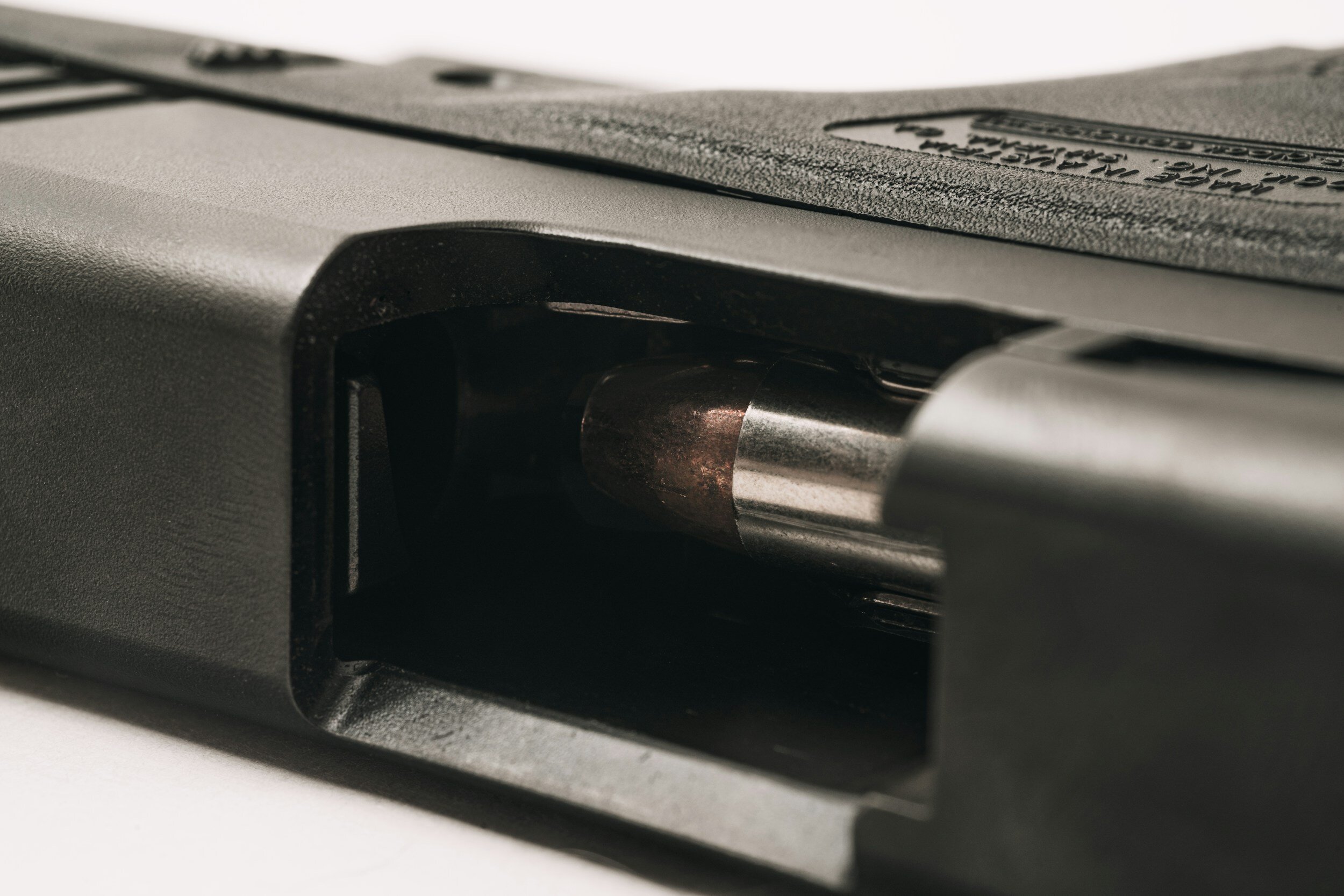
If you choose to concealed carry you take on a significant responsibility that demands carful consideration of various factors, including training, mindset, and equipment. Among the many debates within the concealed carry community, the question of carrying with a round in the chamber stands out as a pivotal topic. Some argue for the added safety of carrying without a round in the chamber, while others emphasize the critical importance of being ready for immediate action. I believe carrying without a round in the chamber thinking you can rack your slide and fire a shot in time, is equivalent to driving your car without your seatbelt on thinking you can buckle it just before an accident happens. In this blog, we delve into the reasons why carrying with a round in the chamber is a crucial aspect of responsible concealed carry.
1. Reduced Reaction Time:
In a self-defense situation, time is of the essence. Having to chamber a round adds a significant delay in your response time. when confronted with a threat, every fraction of a second counts, and a delay in reacting could be the difference between life and death. Carrying with a round in the chamber allows for a quicker and more effective response to potential dangers.
2. Increased Situational Awareness:
Being able to maintain situational awareness is paramount when carrying concealed. Having to chamber a round takes attention away from your surroundings, potentially leaving you vulnerable to unforeseen threats. Carrying with a round in the chamber allows you to stay focused on your environment, giving you a better chance of identifying potential dangers before they escalate.
3. Stress and Motor Skills:
In high-stress situations, fine motor skills can deteriorate, making complex tasks more challenging to perform. Racking the slide to chamber a round requires fine motor skills that may be compromised under stress. Carrying with a round in the chamber eliminates the need for this additional step, ensuring that your firearm is ready to use even when your stress levels are elevated.
4. Maintaining a Defensive Posture:
Carrying with a round in the chamber allows you to always maintain a defensive posture. If a threat arises suddenly, you won’t have to compromise your position or draw unnecessary attention to yourself by chambering a round. The element of surprise is a critical component of self-defense, and carrying with a round in the chamber helps you retain that advantage.
5. Training for Safety:
Responsible concealed carry involves extensive training to ensure safe and effective firearm use. Carrying with a round in the chamber necessitates proper training on holstering and drawing techniques to minimize the risk of accidental discharges. Through consistent and focused training at Goldbar Defense, carriers can develop the skills and confidence needed to safely handle their firearm with a round in the chamber. In every firearms class we offer you will always go over the four safety rules:
A. Treat every gun as though it were loaded.
B. Never point your gun at anything you’re not willing to destroy.
C. Keep your finger OFF the trigger and outside the trigger guard until you are on target and ready to shoot.
D. Always be sure of your target, beyond it, and around it.
In the realm of concealed carry, the decision to carry with a round in the chamber is a deeply personal one. However, understanding the advantages of having a round chambered can be crucial in making an informed choice. By prioritizing reduced reaction time, increased situational awareness, stress management, and maintaining a defensive posture, and training with Goldbar Defense, carriers can better equip themselves for potential threats. Remember, responsible concealed carry is not just about having a firearm-it’s about being prepared to use it effectively and safely in the face of danger.
Remember when seconds count and help is minutes away, you are your own first responder.
Stay safe my friends.
Pastor Bart Goldbar
Sensei | Instructor
Goldbar Defense LLC

Mastering Life’s Battles: Applying the Art of War in Everyday Scenarios
Sun Tzu’s “The Art of War,” an ancient Chinese military treatise, is widely regarded as a timeless guide to strategy and tactics. While originally written for military leaders, the principles found in this classic work are surprisingly applicable to various aspects for our everyday lives as I have laid out in previous blogs (church security, and the workplace). In this blog, we’ll explore how the wisdom of “The Art of War” can be harnessed to navigate the challenges of modern living.
1. Know Yourself and Your Environment:
In “The Art of War,” Sun Tzu emphasizes the importance of self-awareness and understanding your surroundings. This principle can be applied in daily life by taking the time to assess your strengths, weaknesses, and the factors influencing your decisions. Whether you’re facing personal or professional challenges, a thorough understanding of yourself and our environment is crucial for success.
2. Adaptability and Flexibility:
One of Sun Tzu’s key teachings is the necessity of adaptability. In the business world, relationships, or personal development, being flexible and open to change is essential. Rigidity can lead to stagnation, while those who can adjust their strategies based on circumstances are more likely to thrive. We are creatures of habit, and it is hard to accept change at times. But we must step out of our comfort zones in order to adapt and move forward.
3. Strategy and Planning:
Sun Tzu stresses the importance of strategic thinking and planning. In daily life, setting goals, creating plans, and considering potential obstacles can significantly increase your chances of success. Whether you’re planning a career move, a project, or a personal endeavor, a well-thought-out strategy is your roadmap to achievement.
4. Surveillance and Information Gathering:
“The Art of War” underscores the significance of intelligence and information gathering. In today’s information age, staying informed is more accessible than ever. Whether you’re making decisions in your personal life or at work, being well-informed provides a distinct advantage.
5. Adopt the Principle of Deception:
Sun Tzu emphasizes the use of deception to gain an advantage over opponents. While honesty and integrity are paramount, the art of diplomacy and effective communication often involves strategic presentation. Knowing how to communicate your ideas in a way that best serves your objectives can be a powerful tool in various situations. We are not saying to lie, steal, or cheat, but rather choose your words. Don’t talk just to talk, don’t give out unnecessary information, you can have conversations with competitors and might even be friendly with them (which is a great thing). All I’m saying is to give them only enough information to keep the guessing, is your business successful, do you have new products coming out, what are you planning, what are you releasing, what are you working on, your competitors may be asking these questions and if you don’t have the authority to divulge that information then you shouldn’t. On the other hand, as a business owner, you may want to keep information like this away from your competitors. Remember they have a business too and they want to succeed, so they need to know key things about your business to stay ahead of their competition, which is you.
6. Leadership and Teamwork:
Effective leadership is a recurring theme in “The Art of War.” Whether you’re leading a team at work, managing a household, or collaborating on a project, understanding how to motivate and guide others is crucial for success. You need to be willing to do the task you’re asking others to do, when they see you’re willing to put in the work with them, their willing to give the project or task everything they have.
“The Art of War” is more than a military strategy manual; its principles have enduring relevance in our daily lives. By incorporating these timeless teachings, we can navigate life’s challenges with strategic finesse, fostering personal growth, professional success, and harmonious relationships. Sun Tzu’s wisdom serves as a reminder that the art of living is, indeed, a strategic endeavor. Don’t give up just because a task or project is hard, you need to push forward, adapt, and overcome.
Remember when seconds count and help is minutes away, you are your own first responder.
Stay safe my friends.
Pastor Bart Goldbar
Sensei | Instructor
Goldbar Defense LLC

Strategic Wisdom: Applying the Art of War in Your Workplace
In the modern world of business, where competition is fierce and success depends on strategic thinking, the age-old wisdom of Sun Tzu’s “The Art of War” can provide valuable insights believe it or not. Originally written as a guide to military strategy, this ancient Chinese text offers timeless principles that can be adapted to various aspects of life, including the contemporary workplace. Let’s explore how you can leverage the teachings of “The Art of War” to enhance your professional prowess and navigate the challenges of the corporate battlefield.
1. Know Yourself and Your Colleagues:
Sun Tzu emphasized the importance of self-awareness and understanding the strengths and weaknesses of your adversaries. In the workplace, this translates to recognizing your own skills, limitations, and goals, as well as those of your colleagues. By identifying areas for improvement and acknowledging your team’s capabilities, you can create a strategy that capitalizes on strengths and mitigates weaknesses.
2. Strategy and Planning:
“The Art of War” underscores the significance of careful planning and strategic thinking. Similarly, in a professional setting, success often hinges on the ability to plan effectively. Develop a clear vision for your projects, anticipate potential challenges, and formulate contingency plans (just don’t get bogged down by trying to plan for every contingency, believe it or not you cannot plan for everything, and you will waste valuable time). By doing so, you position yourself to make informed decisions and adapt to challenging circumstances.
3. Adaptability:
Sun Tzu’s teachings highlight the importance of adaptability in the face of evolving circumstances. In the workplace, being flexible and responsive to changes can be a key differentiator. Embrace a mindset of continuous improvement, be open to feedback whether its positive or negative, and adjust your strategies as needed. This flexibility will make you more resilient and better equipped to navigate the dynamic nature of modern business.
4. Use of Information:
“The Art of War” places great emphasis on the effective use of information. In the workplace, staying well-informed about industry trends, market conditions, and the action of competitors is crucial. Regularly analyze data and gather intelligence to make informed decisions. This proactive approach ensures that you are not caught off guard and can seize opportunities as they arise.
5. Team Collaboration:
Sun Tzu stressed the importance of unity and collaboration in achieving strategic objectives. Similarly, in the workplace, fostering a collaborative environment is essential for success. Build strong, cohesive teams that can work together harmoniously towards common goals. Encourage open communication and leverage the diverse skills and perspectives within your team to maximize effectiveness.
6. Economic Use of Resources:
Efficient resource management is a fundamental principle in “The Art of War.” Apply this wisdom to your workplace by optimizing the use of time, talent, and resources. Prioritize tasks, delegate responsibility effectively, and ensure that every team member’s skills are utilized to their full potential. This not only enhances productivity but also contributes to a more harmonious and efficient work environment.
“The Art of War” may be ancient, but its principles remain relevant in the contemporary workplace. By incorporating strategic thinking, adaptability, and effective leadership, you can apply the wisdom of Sun Tzu to enhance your professional success. In the corporate battlefield, the art of war becomes the art of strategic excellence, guiding you towards victory in the challenges you face.
Remember when seconds count and help is minutes away, you are your own first responder.
Stay safe my friends.
Pastor Bart Goldbar
Sensei | Instructor
Goldbar Defense LLC

Securing the Flock: Applying the Art of War Principles to Church Security
In the modern world, ensuring the safety and security of the places we choose to worship has become a pressing concern. Churches, like any other institution, are not immune to potential threats. While the primary focus of a church is spiritual growth, guidance and community building, it’s essential to recognize the importance of implementing effective security measures. I recently reread the book “The Art of War” by Sun Tzu, and I realized his teachings could be valuable for many different aspects of our lives. Drawing inspiration from the timeless wisdom of Sun Tzu’s “The Art of War,” we can find valuable insights that can be applied to enhance church security strategies.
1. Know Your Enemy and Know Yourself:
Sun Tzu’s first principle emphasizes the importance of understanding both your strengths and weaknesses as well as those of your potential adversaries. In the context of church security, this means conducting a thorough risk assessment. Identify potential threats, vulnerabilities, and the unique characteristics of your church community. Understanding the environment in which your church operates is crucial for developing a comprehensive security plan.
2. Appear Weak When You Are Strong:
This principle suggests that displaying strength when necessary and appearing weak when required can be a strategic advantage. In terms of church security, this could mean not publicizing all security measures to maintain an element of surprise for potential threats. While having visible security measures is important, some aspects of your security plan may be more effective when kept discreet.
3. All Warfare Is Based on Deception:
Sun Tzu’s emphasis on deception can be applied to church security by creating an environment that discourages potential threats. This involves implementing measures that may not be immediately apparent to the casual observer. For example, having plain-clothes security personnel, utilizing surveillance technology discreetly, and regularly changing security protocols can keep potential adversaries guessing.
4. The Supreme Art of War Is to Subdue the Enemy Without Fighting:
This principle underscores the importance of preventing conflicts whenever possible. In the context of church security, it means establishing a visible but non-confrontational presence. This can include well-trained greeters and ushers who are also security-aware, effectively managing crowd flow, and employing conflict resolution strategies to de-escalate potential issues before they escalate.
5. Engage People’s Minds:
Sun Tzu stresses the importance of understanding the psychological aspects of conflict. In church security, this involves educating the congregation about security measures, conducting regular drills, and promoting a culture of awareness. Encourage members to report suspicious activity and provide them with the tools to contribute to the overall security of the church and surrounding community.
6. Opportunities Multiply as They Are Seized:
This principle emphasizes the importance of seizing the right opportunities at the right time. in church security, it means regularly reassessing and updating security protocols to adapt to evolving threats. Embrace technological advancements, stay informed about current security trends, and be proactive in implementing improvements to stay ahead of potential risks.
The timeless principles of Sun Tzu’s “The Art of War” offer valuable insights that an be applied to enhance church security. By understanding potential threat, employing strategic measures, and fostering a security-aware culture within the church community, it’s possible to create an environment that not only ensures the safety of congregants but also upholds the core values of faith, community, fellowship, grace, and love. Balancing the spiritual mission with the practical need for security, churches can thrive as sanctuaries of peace and worship in an ever-changing world.
Remember when seconds count and help is minutes away, you are your own first responder.
Stay safe my friends.
Pastor Bart Goldbar
Sensei | Instructor
Goldbar Defense LLC

Protecting the Flock: The Crucial Role of Crisis Intervention in Church Security
In an era marked by unpredictability and uncertainty, the need for comprehensive security measures within places of worship has become increasingly apparent. Church communities, like any other gathering, can be vulnerable to various crises, ranging from medical emergencies to more serious threats. To safeguard congregants and ensure a sense of safety within your sacred space, understanding and implementing crisis intervention strategies are of paramount importance.
The Nature of Church Security:
Churches are meant to be sanctuaries where people gather for learning God’s word, worship, reflection, and community. However, the unfortunate reality is that these places are not immune to crisis. From medical emergencies and natural disasters to potential security threats, churches must be prepared to respond swiftly and effectively to protect their members.
Importance of Crisis Intervention Training:
Timely Response to Medical Emergencies: Churches often host a diverse demographic, including elderly members and young children, making medical emergencies a real possibility. Crisis intervention training equips church security teams with the knowledge and skills to respond promptly to situations like heart attacks, seizures, or other health-related issues. Immediate action can be the difference between life and death in these scenarios.
1. Addressing Security Threats:
Unfortunately, churches are not exempt from security threats such as violence, vandalism, or even terrorism. Crisis intervention training teaches security personnel how to identify potential threats, de-escalate tense situations, and coordinate with law enforcement if necessary. A well-prepared security team can help prevent tragedies and protect the congregation from harm.
2. Maintaining Order During Natural Disasters:
Natural disasters, such as earthquakes, floods, or fires, can pose a significant threat to churchgoers, crisis intervention training ensures that security teams can effectively manage evacuation procedures, provide first aid when needed, and coordinate with emergency services to mitigate the impact of these disasters.
3. Supporting Emotional Well-Being:
Crisis intervention is not limited to physical threats; it also addresses the emotional and psychological impact of crisis. Church security teams trained in crisis intervention can offer support to individuals experiencing trauma or emotional distress, ensuring that the aftermath of a crisis is handled with care and compassion.
4. Enhancing Community Resilience:
By investing in crisis intervention training, churches contribute to building a resilient and prepared community. When the congregation feels confident that their safety is a priority, a sense of trust and unity is fostered. This, in turn, strengthens the church community and its ability to weather unexpected challenges.
In an era where safety concerns are on the rise the importance of crisis intervention training for church security cannot be overstated. By equipping security teams with the necessary skills to respond to medical emergencies, security threats, and natural disasters, churches can create and environment where congregants feel safe, supported, and connected. Ultimately, crisis intervention is not just about reacting to emergencies but is a proactive approach to ensuring the well-being of the church community, fostering resilience, and preserving the sacred nature of your worship space.
Remember when seconds count and help is minutes away, you are your own first responder.
Stay safe my friends.
Pastor Bart Goldbar
Sensei | Instructor
Goldbar Defense LLC

Defending the Flock: Exploring the Biblical Foundation of Self-Defense as laid out in Luke 22:35-38
First let’s look at Luke 22:35-38 it says:
35 And He said to them, “When I sent you without money bag, knapsack, and sandals, did you lack anything?”
So they said, “Nothing.”
36 Then He said to them, “But now, he who has a money bag, let him take it, and likewise a knapsack; and he who has no sword, let him sell his garment and buy one. 37 For I say to you that this which is written must still be accomplished in Me: ‘And He was numbered with the transgressors.’ For the things concerning Me have an end.”
38 So they said, “Lord, look, here are two swords.”
And He said to them, “It is enough.”
Our Bibles are timeless sources of guidance for all of us. Our Bibles offer us moral principles and teachings from Christ Himself. What God teaches us through His actions and the actions of His Son are beliefs and behaviors we base our lives around and strive to follow. When it comes to the concept of self-defense, some people have questioned its alignment with our Christian values. These individuals have even gone so far as to ask me “how can I be a Christian and not feel morally convicted teaching and using self-defense techniques”. I have been told I lack faith in God because I don’t depend on Him to protect me. I simply say, “if we don’t need to protect ourselves because God will protect us, then we don’t need to evangelize because God will save everyone”. Let’s take a closer look at Luke 22:35-38 and get some insight into the importance of self-defense in certain circumstances.
Examining the Passage:
1. Practical Preparedness: In this passage, Jesus emphasizes the importance of practical preparedness. By instructing His disciples to carry a moneybag, knapsack, and even a sword, He acknowledges the need for self-reliance in certain situations. This does not imply a rejection of faith but rather a recognition of the realities of the world.
2. Fulfillment of Scripture: Jesus mentions that the disciples carrying swords fulfills the scripture that speaks of Him being “numbered with the transgressors.” This indicates that there are times when followers of Christ may find themselves in challenging situations where self-defense becomes a necessity.
3. Balancing Faith and Practicality: The passage suggests a balance between faith and practicality. While trust in God is paramount, it doesn’t negate the responsibility to take reasonable steps to ensure one’s safety. Owning a sword, in the context, symbolizes the need for believers to be prepared for the challenges that may come their way.
4. Self-Defense as Stewardship: As Christians we are called to be good stewards of our lives and the resources entrusted to us. Taking measures to protect oneself, their families, or people in their care, can be viewed as an aspect of responsible stewardship. By using the tools available for self-defense (hands, feet, weapons), believers acknowledge the value of their own lives and the responsibilities attached to them.
Luke 22:35-38 provides a thought-provoking perspective on the concept of self-defense in our Christian faith. While the passage does not explicitly endorse violence, it does acknowledge the practical need for us as believers to take measures to protect ourselves when faced with danger. As with many Biblical teachings, interpretation is key, and we as believers must approach the issue of self-defense with discernment, prayer, and a deep understanding of the broader Biblical principles of love, justice, and stewardship. In doing so, I believe we can strive to strike a balance between faith and practicality in navigating the challenges of the world. You are justified in protecting yourself, your family, those in your care, and those weaker than you who cannot protect themselves.
Remember when seconds count and help is minutes away, you are your own first responder.
Stay safe my friends.
Pastor Bart Goldbar
Sensei | Instructor
Goldbar Defense LLC

Identifying Public Threats: A Guide to Vigilance and Safety
In an increasingly interconnected world, being aware of potential public threats is crucial for maintaining safety and security. Whether it’s a crowded city street, a public event, or a busy transportation hub, recognizing signs of potential danger can help individuals and communities stay vigilant. When you know what to look for you are one step ahead of the person looking to cause harm and or chaos. In this blog we’ll explore key strategies and tips on how to spot a public threat.
1. Be Observant:
The first and foremost step in identifying public threats is to be observant of your surroundings (situational awareness). Pay attention to the people, the environment, and any unusual activities. If you have read my previous blogs, then you know about situational awareness and how crucial it is. Trust your instincts; if something feels off, it’s worth investigation further.
2. Unattended Items:
One common indicator of a potential threat is unattended items in public spaces. Be wary of abandoned bags, backpacks, or packages. If you notice something suspicious, report it to the authorities immediately. Don’t worry about feeling stupid or what other people might think, it’s always better to be safe than sorry.
3. Behavioral Cues:
Pay attention to the behavior of individuals around you. Look for signs of nervousness, agitation, or erratic movements. Be cautious of people who appear to be studying a location, taking photographs in a way that seems unusual, or exhibiting behaviors that deviate from the norm. In the aftermath of mass shootings or even bombings, when interviewed, people who were right bgy the shooter, explosive device, (and survived) remembered something seemed off about someone or something.
4. Inconsistencies in Dress or Appearance:
While it’s important not to judge based on appearances alone, certain inconsistencies in dress or appearance may raise concerns. Look for individuals who may be overdressed for the weather, wearing bulky clothing that seems out of place (like a winter jacket in the middle of July) or refusing to make eye contact.
5. Overly Protective or Defensive Behavior:
Individuals exhibiting overly protective or defensive behavior in public spaces may be cause for concern. This includes those who are unusually focused on securing a specific area or seem to be guarding an object or location. Trust your instincts and report such behavior to authorities again don’t worry about what people may think or may say, it’s always better to be safe than sorry.
6. Communication Signs:
Pay attention to verbal and non-verbal communication. Individuals engaged in suspicious activities may use coded language, speak in hushed tones, or avoid eye contact. Be alert to signs of communication that don’t align with the context of the situation. I would also like to point out that people who are deaf or hard of hearing use sign language to communicate. You have to keep this in mind and watch the individuals communicating. If you can’t speak sign language at least know what it looks like to you don’t confuse a simple conversation with a threat of ill intentions.
7. Surveillance Awareness:
Be mindful of individuals who appear to be conducting surveillance. This could involve prolonged or repeated observation of a location, mapping out escape routes, or seemingly documenting security measures. If you notice such activities, report them promptly. Watch people taking photos of the same background but from different angles. Typically, tourists will take a photo or two from one location not several. Think of it this way: if you’re at the Capitol building with your family you will probably take a photo of the building from the front and a couple inside. You would not take fifteen photos of the front, sides, and back of the building, all form different angles maybe not even focusing on any one person.
8. Crowd Dynamics:
Understanding the dynamics of crowds is essential. Be aware of sudden shifts in crowd behavior, such as panic, a rapid dispersal, or an unusual convergence towards a specific point. These can be indicators of a potential threat or emergency situation. Observation and situational awareness go hand in hand. If you haven’t read our previous blog on situational awareness I suggest you go there next and read them, they will help you better understand how to read people, the room, and be better prepared.
Remain vigilant and knowing how to spot potential public threats is everyone’s responsibility. By staying observant, trusting your instincts, and reporting suspicious activities promptly, you contribute to the overall safety and security of your community. Remember, awareness is a powerful tool in preventing and mitigating potential threats, and it starts with each individual being proactive and informed.
Remember when seconds count and help is minutes away, you are your own first responder.
Stay safe my friends.
Pastor Bart Goldbar
Sensei | Instructor
Goldbar Defense LLC

Train How You Fight: Securing Sacred Spaces: The Crucial Role of Training for Church Security
Places of worship, including churches, have historically been regarded as sanctuaries, providing solace and spiritual refuge. However, in today’s unpredictable world, the need for comprehensive security measures in churches has become increasingly evident. While technological advancements offer various security solutions, the importance of training in preparing for potential threats cannot be overstated. This blog delves into the significance of training in shaping an effective and vigilant church security team.
The Changing Landscape of Church Security:
Gone are the days when church security merely involved locking doors after services. The evolving security landscape demands a proactive and well-prepared approach. Training plays a pivotal role in adapting to these changes and ensuring the safety of congregants and church staff.
1. Prevention Through Preparedness: Training instills a sense of preparedness among security teams. It goes beyond the theoretical understanding of potential threats and equips individuals with practical skills to identify and prevent security breaches. From recognizing suspicious behavior to implementing evacuation procedures, a well-trained security team can significantly reduce the risk of incidents. Make sure your team practices procedures and protocols at least once a month. This way your team is prepared to act and not react to an emergency.
2. Crisis Response: In the unfortunate event of an emergency, a trained security team can make all the difference. Whether it’s a medical emergency, natural disaster, or an active threat, effective crisis response hinges on well-practiced protocols. Training helps church security teams develop the muscle memory necessary to act swiftly and decisively in high-stress situations. Your security team needs to have one or members certified in CPR as well as First Aid. This training helps your church be prepared for any emergency.
3. Communication and Coordination: Effective communication is paramount in any security operation. Training facilitates the development of clear communication channels among team members and with other relevant authorities. This ensures that information flows seamlessly during critical moments, enabling a coordinated response that minimizes confusion and maximizes effectiveness. A good way to communicate is with radios. At Goldbar Security we can help you learn how to use radios to your advantage.
4. Cultural Sensitivity and Community Relations: Churches are unique spaces with diverse congregations. Training should not only focus on physical security but also on understanding the cultural sensitivities of the community. A well-trained security team respects the sanctity of the church environment while fostering positive relations with congregants. Just because you may not agree with someone’s lifestyle or pollical views does mean you discount them as a person. After all Jesus sought out people some of us might be ashamed to be seen with today. We need to love everyone in our church and be willing to lay down our lives for them like Jesus Christ did for all of us.
5. Adapting to Technological Advances: Technology is an integral part of modern security solutions. Training ensures that security teams are proficient in the use of surveillance systems, access control, and other technological tools. Additionally, it helps them stay updated on emerging security technologies, allowing churches to maintain a proactive stance against potential threats. If your church does not have a budget for cameras, radios, ect. that’s not a problem. You have security staff that have eyes, ears, and a gut feeling they can use to make sure the building and congregants are safe.
In an era where the security landscape is ever evolving, the importance of training for church security cannot be overstated. A well-trained security team not only safeguards the physical well-being of the congregation but also upholds the spiritual and emotional sanctity of the church. By investing in comprehensive training programs like the ones we offer at Goldbar Defense, churches can create a secure environment that allows worshippers to focus on their faith without fear, fostering a sense of community and togetherness. In essence, training how you’re going to fight is not just a strategy; it’s a commitment to ensuring the safety and well-being of all who seek solace within the walls of your church.
Remember when seconds count and help is minutes away, you are your own first responder.
Stay safe my friends.
Pastor Bart Goldbar
Sensei | Instructor
Goldbar Defense LLC